What is it? Anxiety is a normal and frequently healthy emotional response that we all have. But for some individuals the feeling of anxiety can become overbearing and leads to excessive feelings of nervousness, worry and fear.
Anxiety that is causing overbearing feelings of worry and fear in everyday life is linked to an overactive stress response.
What is the Stress Response? A simple guide.
When your inner alarm system says fire! But there is no fire….
The stress response (also known as the fight-or-flight-response) is a reaction that your body has to anything that it views as dangerous. This danger can be real or imaginary. So for instance, it can happen when something threatens you with physical harm, such as when a wave on the beach almost sweeps you off your feet and you fear you will be swept away. Equally it could be when something threatens your emotional well-being, such as fear of embarrassment at messing up a work presentation. The stress response means that your body (or brain if you prefer) prepares itself to either face the threat (fight) or run away (flight) and it does this by triggering several changes in your body, such as making your heart beat faster and your breathing quicker (See image below).
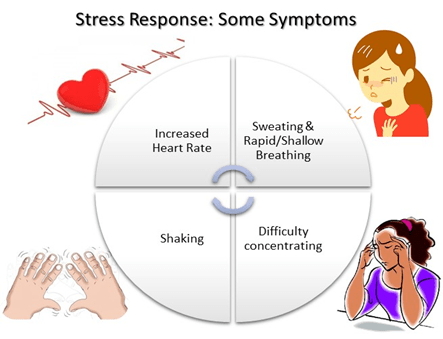
These responses work great in preparing us for an immediate danger that we need to confront or run away from, as they prepare the body for instant action. They happen so quickly that we are not aware of the changes occurring – that’s why someone may be able to leap away from an oncoming car, before they have even had a chance to think about what is happening.
When the stress response is not helpful
However, for some people the stress response can cause problems when the threat they face is emotionally stressful, such as an exam or an argument with a partner. Here, the situation can be made worse by a strong stress response. In the case of an exam, an overly strong stress response could have an impact on how well someone is able to concentrate on the exam; or in the case of an argument, the stress response could trigger a greater anger response than is necessary.
For others, their body can unexpectedly go into a stress response mode when they think they are relaxed, and are doing simple activities such as walking home at the end of the day, or even sat down watching TV. Sometimes these are called panic attacks. For someone who thinks they are relaxed, to suddenly have their body switch into the stress response, can be a truly terrifying experience. A racing heart, chest pain, or sudden feeling of shortness of breath can make them think they are about to have a heart attack, or die. This could be likened to a fire alarm going off in our body, when there actually is no fire to tackle.
How to manage an overactive stress response? The relaxation response
Luckily humans are well designed and our bodies have a way to counteract the impact of the stress response, which is the relaxation response. Speaking to your therapist about the types of stresses you encounter, when they occur, and what your emotional /physical symptoms are, will help you both to identify ways to manage what triggers your stress response and importantly how to turn on a relaxation response. For many people, knowing their trigger signs or warning signs can allow them to recognise when to use their relaxation skills before they become overwhelmed.
Relaxation Skills
Skills I might suggest that clients engage in include:
- Deep Breathing Exercises
- Body Scanning
- Progressive Muscle Relaxation
- Visualisation
- Meditation
I also often suggest clients include more physical activity into their daily life. Activity such as a brisk walk, can help deepen your breath and also relives muscle tension (counteracting two major symptoms of the stress response). Also movement exercises like tai chi and yoga, are good for deep breathing and bring a sense of calm.
 Olivia Longe @ North-Therapy